
Quality improvements: Keeping patients safe from pressure injuries
When people come to the hospital, they expect care for their illness, not a new problem that develops while they’re here. Unfortunately, hospital-acquired conditions can happen, and one of the most common is pressure injuries, also known as pressure sores or bedsores.
Pressure injuries are areas of skin that break down, usually over bony spots like heels or the tailbone. They can also appear under medical devices, like a catheter or nasal oxygen tubing. Certain patients are at higher risk—especially those with limited mobility, reduced sensation, weakness, poor nutrition, or moist skin.
Preventing pressure injuries
At Southeast Iowa Regional Medical Center, keeping patients safe is a top priority. Nurses assess every patient’s risk for pressure injuries when they arrive and throughout their stay. Based on these assessments, we use a range of preventive measures, including:
-
Special air mattresses that distribute weight evenly
-
Repositioning and turning patients every two hours
-
Adjusting the head of the bed to reduce pressure on certain areas
-
Elevating heels off the mattress
-
Applying protective dressings to areas more prone to skin breakdown
Even with all these measures, pressure injuries can still occur. Our skin, along with underlying tissue, is part of the body’s integumentary system—an organ system that can be affected by serious illness. When a patient’s liver, kidneys, or other organs are failing, skin breakdown may happen despite the best care, especially at the end of life.
Tracking and improving performance
The Centers for Medicare & Medicaid Services (CMS) track hospital-acquired conditions, including pressure injuries, to help patients make informed decisions about where to receive care. Southeast Iowa Regional Medical Center reviews every pressure injury closely to understand what happened and how we can prevent it in the future.
Patient safety is always a priority. When an incident occurs, we create action plans and process improvement projects to make care safer and reduce future pressure injuries.
Technology that helps nurses help patients
Turning patients every two hours is one of the most effective ways to prevent pressure injuries—but hospitals face real challenges—patients may be complex or unable to move easily, staff have many tasks to juggle, and sometimes patients may refuse to be turned. Studies show that compliance with turning schedules can be as low as 60% nationwide.
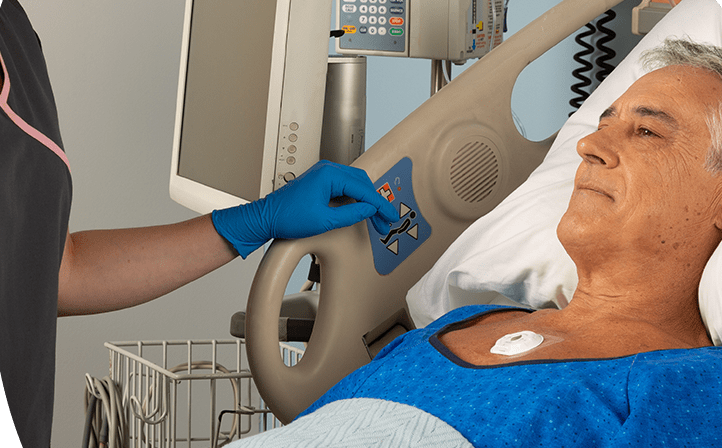
To help, Southeast Iowa Regional Medical Center uses LEAF Sensors—small wearable devices applied to a patient’s chest. These sensors track a patient’s position, time spent in each position, and angle of turns. The information appears on a dashboard with easy stoplight indicators (green, yellow, red) showing when it’s time to turn. Once the turn is completed, it automatically updates the patient’s medical record.
Reducing pressure injuries is a top hospital priority, and we’ve made great progress. Over the past four years, reportable pressure injuries have dropped significantly. The LEAF Sensor technology has helped nurses maintain a 90% turning compliance rate across our West Burlington and Fort Madison units.
How patients and families can help
Pressure injuries can develop quickly if someone stays in one position too long—but together, we can prevent them.
If your loved one is in the hospital:
-
Encourage them to shift or turn at least every two hours
-
Ask the care team how you can safely help during visits
If your family member is in a nursing facility:
-
Check their skin often, especially over bony areas like heels, hips, and the tailbone
-
Speak up immediately if you notice redness, warmth, or a sore spot
-
Help with repositioning and keeping skin clean and dry
-
Ask staff about turning schedules
Small actions make a big difference. Working together, patients, families, and caregivers can protect skin health and prevent serious injury.
Click here to learn more about our commitment to our community and improving the patient experience.